
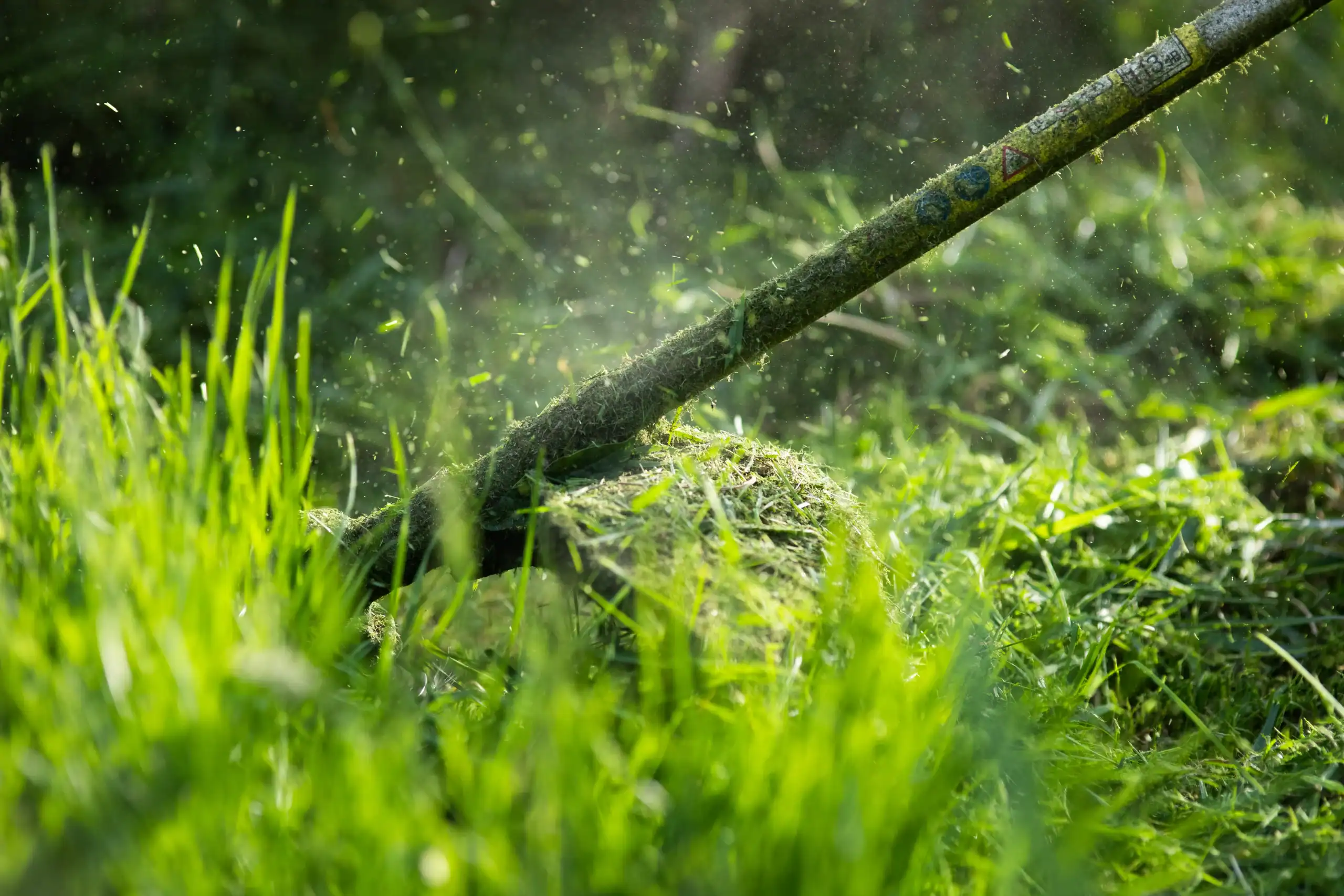
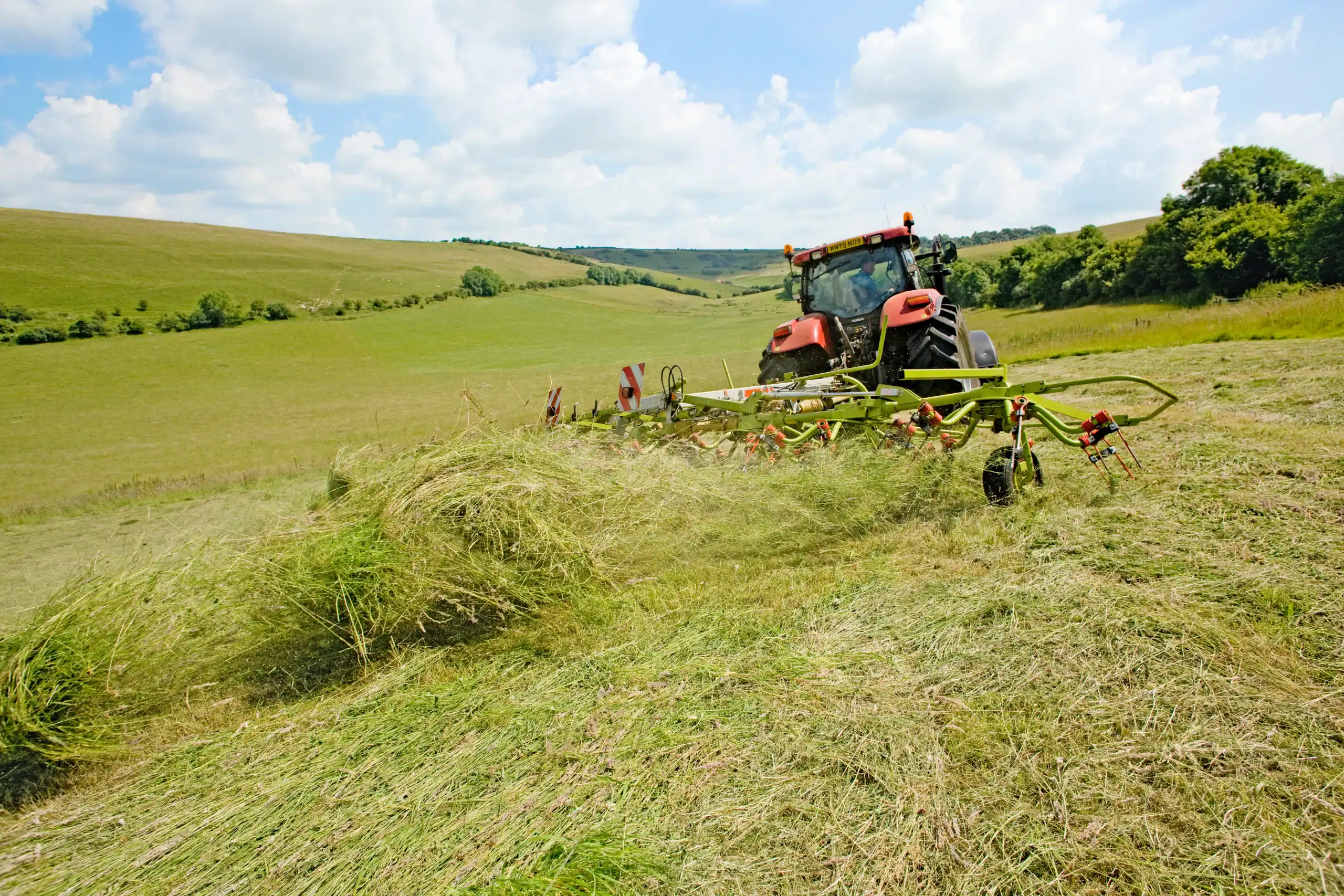
When your land gets away from you, it doesn’t just look bad. Overgrown fields create fire hazards, especially during Dahlgren’s dry summer months. Thick brush hides pests, snakes, and debris you can’t see until someone gets hurt.
Bush hogging cuts through all of it. Tall grass, dense weeds, invasive saplings, vines choking out what you actually want growing there. The process is fast and leaves your topsoil where it belongs, unlike grading or bulldozing that strips everything down to bare dirt.
What’s left behind becomes mulch. It breaks down, feeds the soil, and keeps erosion in check when the heavy rains hit. You get cleared land that’s immediately safer and more functional, without turning your property into a mud pit or creating runoff problems. That matters in the Northern Neck, where sandy soil and waterfront conditions make erosion a real issue if you’re not careful about how you clear land.
We’ve been handling excavation and property maintenance across the Northern Neck for years. We’re not the cheapest option in Dahlgren, and that’s intentional. You’re paying for equipment that actually works when the ground is wet or uneven, operators who know how to read terrain, and a crew that shows up when we say we will.
Most of our work comes from property owners who’ve dealt with overgrowth that got out of hand. Retirees who bought land and realized maintaining it is harder than expected. Second-home owners who can’t get down here every month to keep up with it. Farmers and business owners who need commercial mowing done right the first time.
We’ve cleared fields that hadn’t been touched in years, handled storm damage that blocked access roads, and maintained properties where the conditions change depending on how close you are to the water. If you’re in Dahlgren or anywhere in the Northern Neck, we’ve probably worked on land similar to yours.
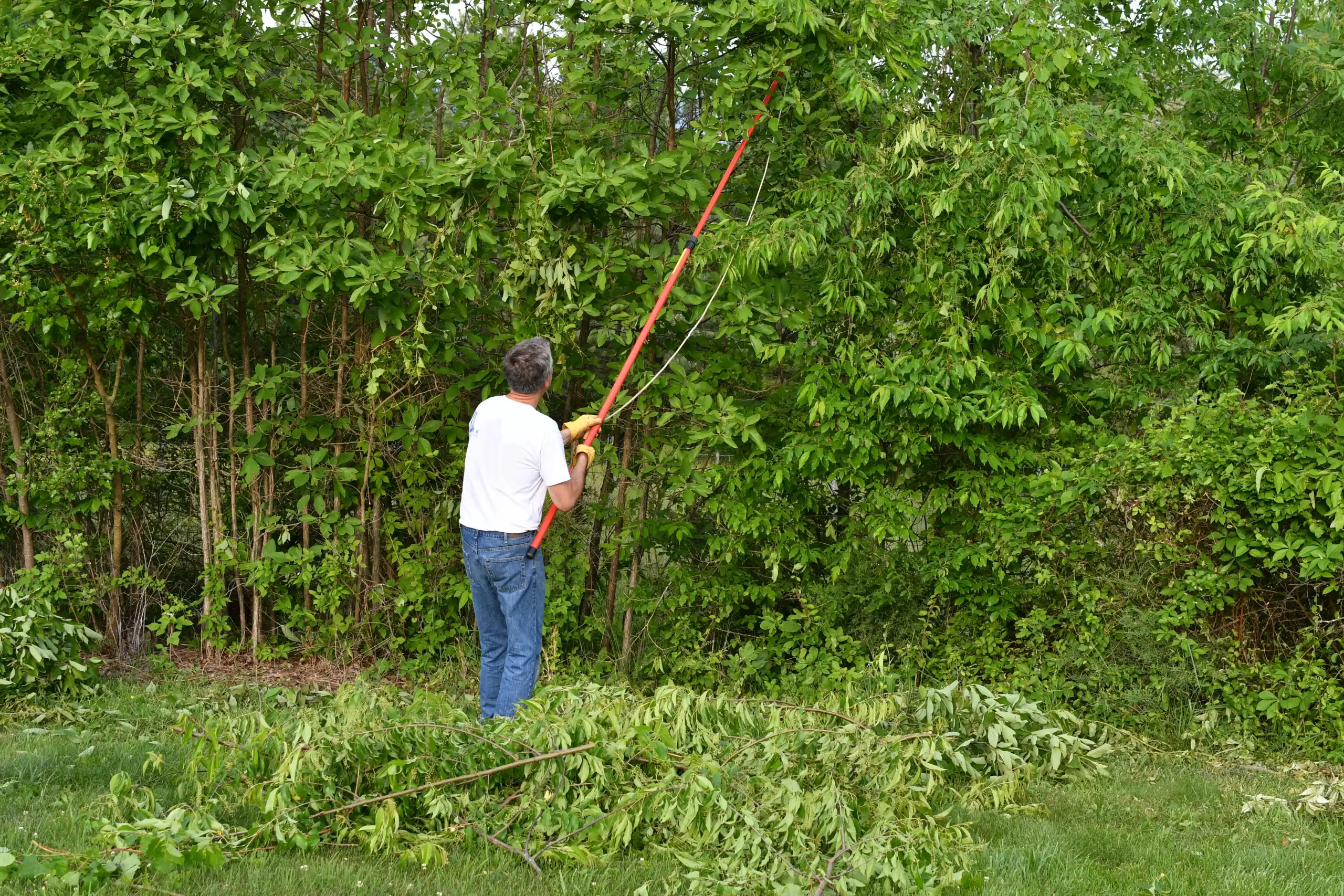
First, we look at what you’re dealing with. How thick is the growth? What kind of vegetation? Is the ground level or sloped? Are there hidden obstacles like stumps, rocks, or old fence lines? That determines what equipment we bring and how we approach the job.
Then we clear it. Our bush hog cuts through grass, brush, and saplings up to a few inches thick. The machine mulches everything as it goes, so you’re not left with piles of debris to haul off. We work in passes, making sure we’re not missing spots or leaving uneven patches that’ll grow back faster than the rest.
After we’re done, you’ve got cleared land and a layer of mulch on top. That mulch breaks down over time, which is good for your soil. If you need the area maintained regularly, we can set up a schedule. If it’s a one-time clearing to prep for something else, you’re ready to move forward. Most jobs take a day or two depending on acreage and density, though bigger or more complicated properties take longer.
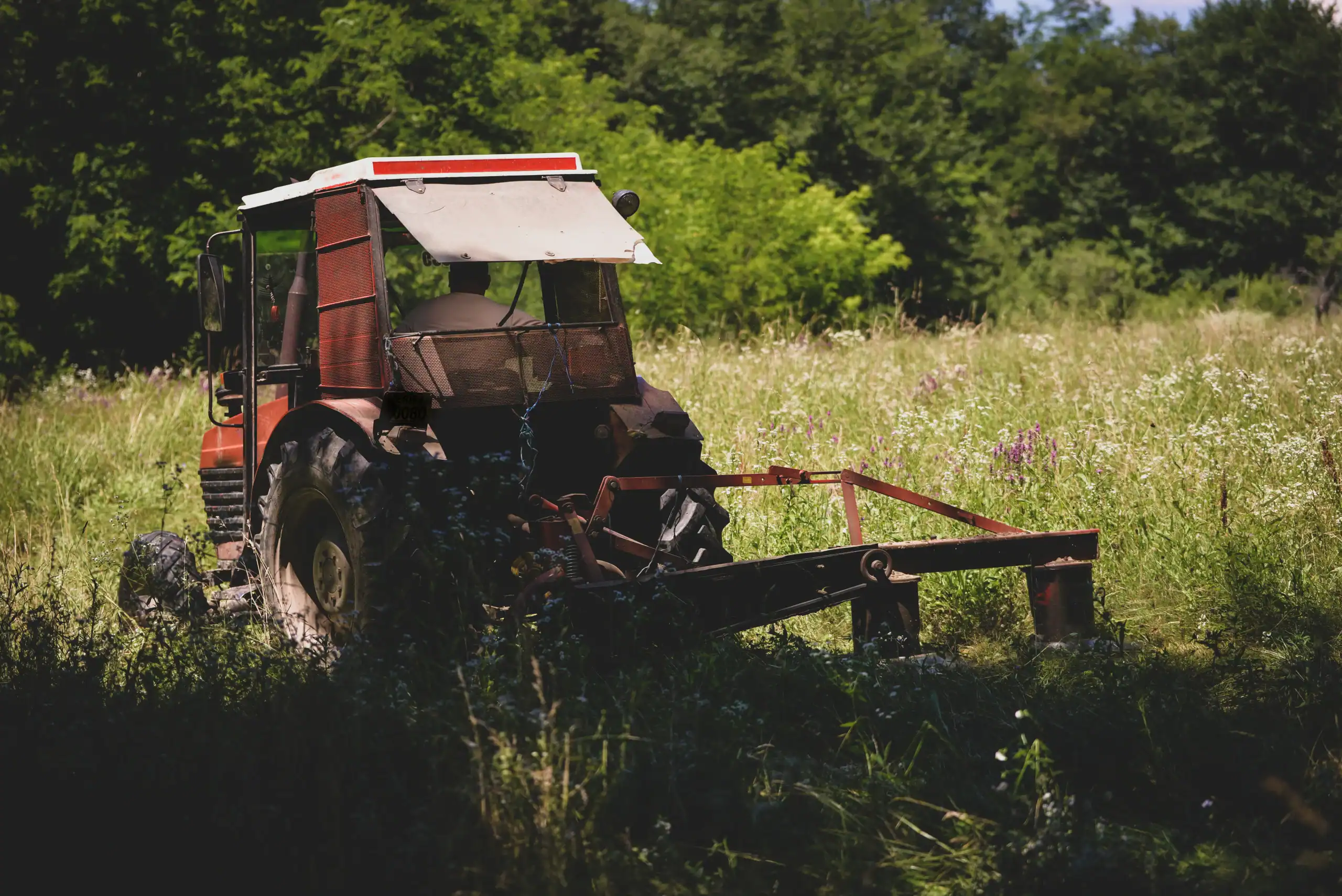
Ready to get started?
Bush hogging works for tall grass mowing when your field has gotten too thick for a regular mower. It handles brush cutting when saplings and woody growth have taken over. It clears lots that need to be prepped for development, farming, or just basic access and maintenance.
In Dahlgren and the surrounding Northern Neck area, we see a lot of waterfront properties where growth gets aggressive near the water. We also work on rural lots where owners are dealing with invasive species that spread fast if you don’t stay on top of them. Commercial properties need field mowing to keep their land compliant and presentable. Farms need pastures cleared so livestock can actually use them.
The equipment we use depends on what you need. Standard bush hog attachments for most field work. Heavier brush cutters when you’ve got thicker growth or small trees mixed in. We’ve also got forestry mulchers for jobs that need more aggressive clearing, though bush hogging is usually the right call for routine maintenance and most overgrowth situations.
Timing matters too. Late fall through early spring is ideal because plants are dormant and the ground is more stable. Summer bush hogging is possible and sometimes necessary for fire prevention, but it’s harder on equipment and the land when everything’s actively growing and the soil is loose from heat and rain.
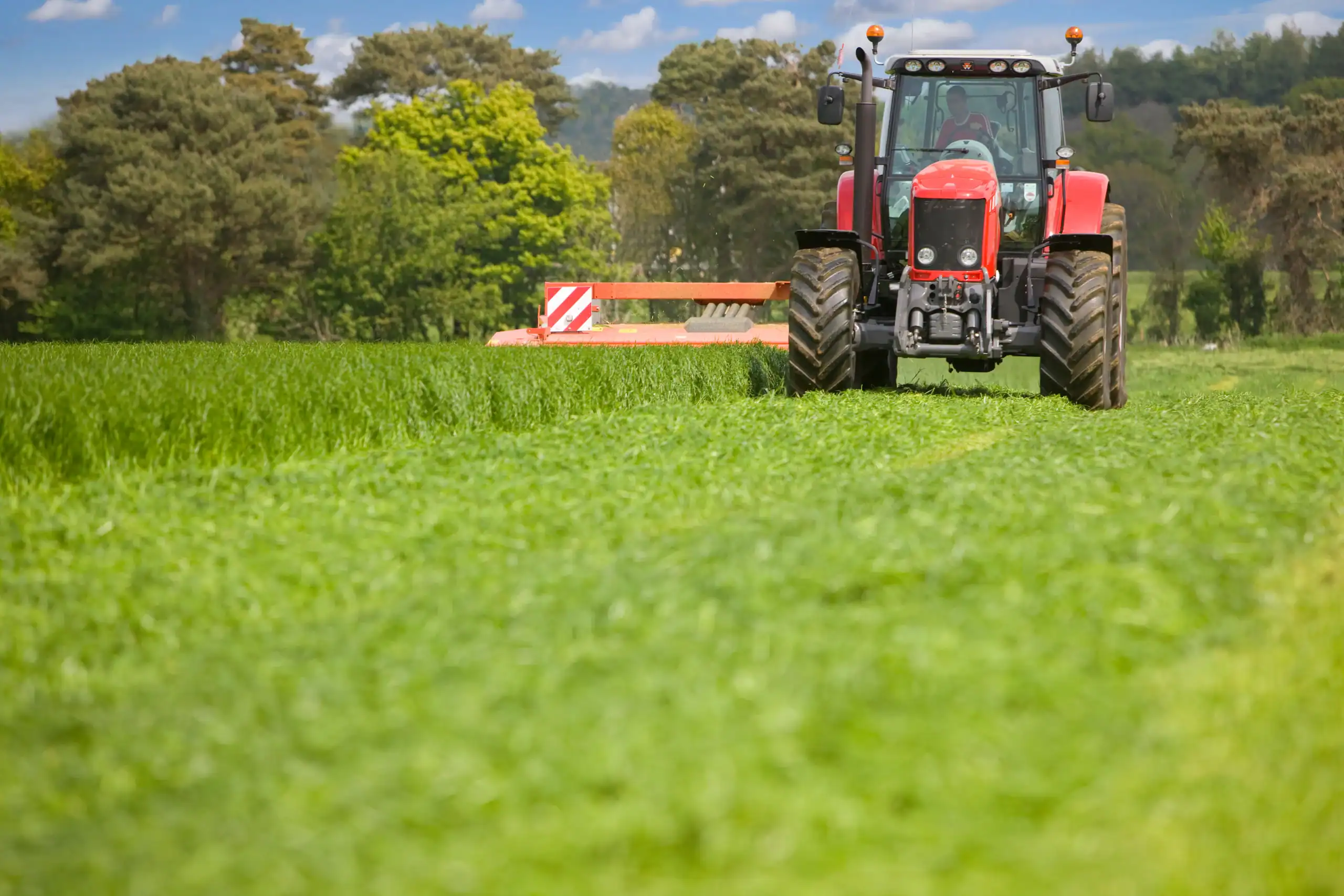
Most bush hogging in this area runs between $100 and $150 per acre for standard field work. That’s when you’ve got relatively open land with grass, weeds, and light brush. If your property has heavy growth, thick saplings, or difficult terrain, expect closer to $200 to $250 per acre.
The price changes based on density and accessibility. If we can move quickly through open fields, it’s less expensive. If we’re navigating around trees, dealing with steep slopes, or cutting through years of neglected growth, it takes more time and equipment wear. We don’t charge by the hour because that penalizes you for having harder jobs, but the per-acre rate adjusts to reflect what’s actually involved.
For larger properties, the per-acre cost usually drops because we’re spending less time moving equipment and more time clearing. Smaller lots under two acres sometimes have a minimum charge because the setup and travel time is the same whether we’re clearing half an acre or five.
Bush hogging cuts and mulches vegetation at ground level. It’s fast, cost-effective, and works well for fields, pastures, and properties with grass, brush, and small saplings. The roots stay in the ground, which is good for erosion control and soil health.
Forestry mulching is more aggressive. It grinds up everything including stumps and larger trees, turning it all into fine mulch. It’s better for heavy clearing jobs where you’re dealing with thick woods or need to remove trees entirely. It’s also more expensive, usually $400 to $800 per acre depending on density.
For most Dahlgren properties, bush hogging is the right choice. It handles what you need cleared without the cost or intensity of forestry mulching. If you’ve got serious tree removal or land conversion work, then mulching makes sense. But if you’re maintaining fields, clearing overgrown lots, or cutting back brush that’s gotten out of control, bush hogging does the job at a fraction of the cost.
Late fall through early spring is ideal. Plants are dormant, so you’re not fighting active growth. The ground is usually more stable because you’re not dealing with summer heat that loosens sandy soil or heavy spring rains that turn everything into mud.
That said, summer bush hogging is sometimes necessary. If you’re dealing with fire hazards during dry conditions, you can’t wait until fall. If your property is getting cited for overgrowth or you need access cleared for an urgent project, we’ll handle it in summer. It’s just harder on the equipment and the land when everything’s actively growing.
Winter work is possible as long as the ground isn’t frozen or waterlogged. In the Northern Neck, we don’t usually get conditions that completely shut down bush hogging for months at a time. The bigger concern is scheduling around rain, because wet ground tears up easily and creates ruts that are a pain to fix later.
No, not if it’s done correctly. Bush hogging is a non-invasive clearing method. The cutter stays above ground level, so your topsoil and root systems stay intact. That’s the whole point compared to grading or bulldozing, which strips everything down and leaves you with bare dirt that erodes fast.
The key is knowing how to read the land. If the ground is too wet, heavy equipment creates ruts and compaction. If you’re working on a slope, you need to cut with the terrain, not against it. Experienced operators know how to adjust speed, cutting height, and direction based on conditions.
What you’re left with is cleared land and a layer of mulch. That mulch protects the soil, holds moisture, and breaks down into organic matter over time. It’s actually better for your property than hauling everything off and leaving bare ground exposed to sun, rain, and wind. The Northern Neck’s sandy soil erodes easily, so keeping that organic layer on top matters.
Most properties in Dahlgren need bush hogging once or twice a year. Once in late spring or early summer to knock back the growing season’s growth, and once in fall to clean up before winter. That keeps things manageable and prevents the kind of overgrowth that turns into a bigger problem.
If your land grows aggressively or you’re dealing with invasive species, you might need it more often. Waterfront properties near creeks or wetlands tend to grow faster because of the moisture. Properties that have been neglected for years might need an initial heavy clearing, then regular maintenance after that to keep it under control.
Commercial properties and farms usually stay on a schedule because they need the land functional year-round. Residential properties can sometimes stretch it to once a year if growth is slow and the land isn’t being used heavily. It depends on what you’re trying to accomplish and how fast things grow back on your specific property.
Yes. That’s a big part of what we do. Properties that have been sitting untouched for five, ten, even twenty years. Thick brush, saplings turning into trees, vines covering everything, and growth so dense you can’t see what’s underneath.
Heavy clearing jobs take longer and cost more because we’re dealing with years of accumulated growth. Sometimes we need to make multiple passes, cutting down the tallest stuff first, then going back to get closer to ground level. If there are larger trees mixed in, we might need to bring in additional equipment or recommend forestry mulching for those sections.
The result is the same though. You get your land back. Once it’s cleared, keeping it maintained is much easier and less expensive than letting it go again. Most people who call us for heavy clearing jobs wish they’d done it sooner, because the longer you wait, the harder and more expensive it gets.
Other Services we provide in Dahlgren