Essential Questions to Ask Before Hiring a Lot Clearing Service in Callao, VA
Smart questions help Callao property owners choose the right lot clearing contractor and avoid costly mistakes during their project.
Share:
Summary:
Choosing the right lot clearing service in Callao, VA requires asking the essential questions that separate professional contractors from the rest. This guide covers the critical inquiries about licensing, experience, methods, and costs that protect your investment.
You’ll discover what questions reveal a contractor’s true expertise and how to spot red flags before they become expensive problems.
Table of contents
You’ve got land that needs clearing in Callao, and you’re staring at a long list of contractors who all sound the same. The wrong choice here doesn’t just cost money – it can leave you with damaged soil, incomplete work, or worse, liability issues when something goes wrong.
The difference between a smooth project and a nightmare often comes down to asking the right questions upfront. Here’s what you need to know before signing anything.
What Licensing and Insurance Should Your Contractor Have
This isn’t just paperwork – it’s your protection. In Virginia, operating without proper licensing is a criminal misdemeanor, and you don’t want to find that out the hard way.
Ask to see their VA Class A contractor’s license and current insurance certificates. A legitimate lot clearing contractor will have both ready to show you without hesitation.
Why Virginia Class A Licensing Matters for Your Project
Virginia requires specific licensing for land clearing work, and there’s good reason for it. Unlicensed contractors can’t legally perform the work, which means you’re taking on massive liability if something goes wrong.
When a contractor shows you their Class A license, you’re seeing proof they’ve met state requirements for experience, financial responsibility, and knowledge of local regulations. This licensing also means they understand Virginia’s environmental regulations, which can be complex in counties like Essex.
The insurance piece is equally critical. Lot clearing involves heavy machinery and inherent risks. If a worker gets injured or property gets damaged, proper insurance protects you from lawsuits and claims that could cost tens of thousands.
Don’t accept excuses about licenses being “in process” or insurance being “handled by the company.” These documents should be current and available immediately.
What Insurance Coverage Actually Protects You
General liability insurance is the baseline, but lot clearing requires more comprehensive coverage. You want to see workers’ compensation insurance that covers their crew, plus liability coverage that protects your property.
Ask for specific coverage amounts. Professional contractors typically carry $1 million or more in liability coverage because they understand the risks involved. Small coverage amounts often signal a contractor who either doesn’t understand the business or can’t afford proper protection.
Request certificates of insurance that name you as an additional insured party. This extra step ensures you’re notified if their coverage lapses during your project. Any contractor who balks at this request isn’t someone you want working on your property.
The certificate should come directly from their insurance company, not a photocopy they printed themselves. Insurance fraud happens more than you’d think in construction trades.
How to Evaluate Their Equipment and Methods
The equipment they bring tells you everything about how your project will go. Modern forestry mulchers can clear land efficiently while preserving soil health. Older bulldozers and chainsaws often mean longer timelines and more site damage.
Ask what specific equipment they’ll use and why they chose that approach for your property. Professional contractors can explain their equipment choices and how different machines affect your land.
Forestry Mulching vs Traditional Clearing Methods
This choice affects your timeline, costs, and what your land looks like when we’re done. Traditional methods involve cutting trees, piling debris, and either burning or hauling everything away. It works, but it’s time-consuming and often requires multiple permits.
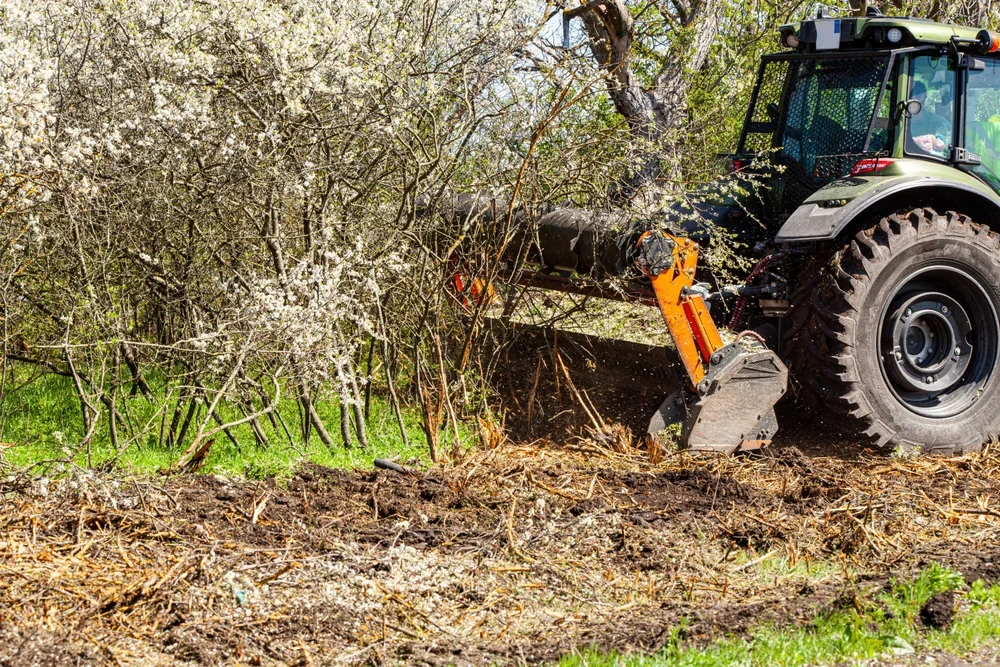
Forestry mulching uses specialized machines that grind trees and brush into mulch right where they stand. The mulch stays on your property, acting as natural erosion control and soil enrichment. There’s no burning, no hauling, and typically fewer permit requirements.
The efficiency difference is significant. While traditional clearing might take weeks for an acre, forestry mulching can often complete the same area in a day or two. The cost savings add up when you factor in reduced labor time and no debris disposal fees.
However, forestry mulching works best for certain types of vegetation and terrain. Trees larger than 8 inches in diameter or rocky terrain might require different approaches. A good contractor will walk your property and recommend the best method based on what they actually see.
Questions About Timeline and Site Conditions
Every property presents unique challenges, and experienced contractors factor these into their timeline estimates. Ask how they handle rocky terrain, wet areas, or steep slopes. These conditions affect both the approach and the final cost.
Weather dependencies matter too. Some clearing methods work better in dry conditions, while others can handle moisture. Understanding these limitations helps you plan your project timeline realistically.
Ask about access to your property. Can their equipment reach all areas that need clearing? Will they need to create temporary access roads? These details affect both timeline and costs, and they should be discussed upfront.
Site cleanup is another critical detail. What condition will your property be in when we finish? Professional contractors leave sites ready for the next phase of your project, not looking like a disaster zone.
Making the Right Choice for Your Callao Property
The questions you ask before hiring determine whether your lot clearing project goes smoothly or becomes a costly headache. Focus on licensing, insurance, and experience with properties similar to yours.
Don’t let price be your only consideration. The cheapest bid often comes from contractors cutting corners on licensing, insurance, or proper equipment. When you’re dealing with heavy machinery and significant liability, those corners matter.
For professional lot clearing services in Callao and throughout Essex County, we bring the proper licensing, insurance, and equipment to handle your project safely and efficiently.